

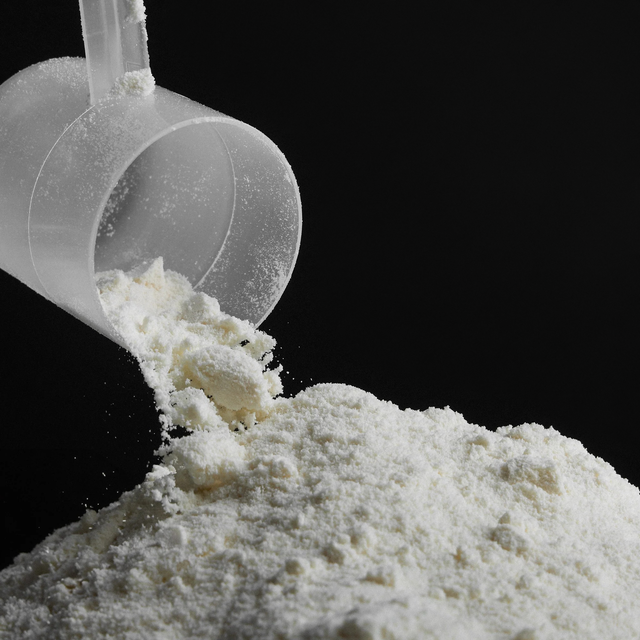
THE WHEY CRISIS. An update from Athlete Fuel.
If you've been following the sports nutrition industry closely, you've probably noticed growing discussions around whey protein availability and pricing over the past few months. What started as isolated reports from manufacturers and raw material suppliers has now developed into a global supply issue that is affecting virtually every brand that relies on whey protein concentrate and whey protein isolate.
At Athlete Fuel, we believe in being transparent with our customers, especially when market conditions have the potential to impact product availability and pricing.
This article explains what is happening, why the situation is far more complex than a temporary shortage, and why protein prices are likely to rise significantly across much of the world in the coming months.
WHAT IS HAPPENING?
The price of whey protein has increased dramatically over the last several months.
Many manufacturers that were purchasing whey protein concentrate (WPC-80) at around €10-12 per kilogram during 2024 and early 2025 are now receiving quotations that are more than double those levels. In some cases, availability itself has become a bigger concern than price.
The issue is not limited to a single supplier, country, or dairy processor. The trend is affecting major producers across Europe, North America, and Oceania, which means the entire sports nutrition industry is drawing from the same increasingly constrained pool of raw material.
This is why the situation has attracted so much attention among supplement manufacturers, distributors, and retailers worldwide.
WHY WHEY PROTEIN IS DIFFERENT FROM MOST INGREDIENTS
Many consumers assume that if demand increases, manufacturers can simply produce more. Unfortunately, whey protein does not work that way.
Whey is a byproduct of cheese production. Before a kilogram of whey protein powder can exist, milk must first be processed into cheese, generating liquid whey as part of that process.
That liquid whey then undergoes multiple stages of filtration, concentration, purification, drying, and packaging before it becomes the ingredient used in protein supplements.
The important detail here is that whey protein production is tied to the dairy industry. Manufacturers cannot simply decide to double output next month because demand for protein supplements has increased.
The entire supply chain must have the capacity to handle it.
THE REAL BOTTLENECK: FILTRATION CAPACITY
One of the most significant challenges facing the industry today is filtration capacity.
Modern whey protein production relies on sophisticated membrane filtration systems capable of separating and concentrating proteins from liquid whey. These facilities require substantial investment, highly specialized equipment, and years of planning.
Building additional capacity is not comparable to adding another production line inside a supplement factory.
New filtration facilities require:
• Significant capital investment;
• Specialized engineering expertise;
• Regulatory approvals;
• Long construction timelines;
• Trained personnel.
Even if dairy companies decided today to expand capacity aggressively, the effects would likely not be felt for several years. This is one of the main reasons why a rapid solution is unlikely.
COMPETITION FROM THE FOOD INDUSTRY
Sports nutrition is no longer the only industry interested in whey protein.
Over the past decade, high-protein foods have become one of the strongest trends in the food sector.
Protein yogurts, protein puddings, protein ice creams, protein bars, protein snacks, ready-to-drink shakes, and meal replacements are now found in virtually every supermarket.
Large multinational food companies often purchase enormous quantities of whey protein and frequently operate under contracts that smaller supplement brands simply cannot compete with. When supply becomes constrained, these larger buyers naturally receive priority. The result is increased competition for the same raw material and additional pressure on pricing.
THE GLP-1 EFFECT: A NEW SOURCE OF DEMAND
Another factor that is often overlooked is the rapid rise of GLP-1 medications such as Ozempic, Wegovy, Mounjaro, and similar treatments used for weight management.
These medications have transformed the way millions of people approach dieting and body weight reduction. While they are extremely effective at reducing appetite and helping users lose weight, they also create a well-known challenge: preserving muscle mass during periods of rapid weight loss.
As a result, doctors, dietitians, and nutritionists increasingly recommend higher protein intake to patients using these medications. Many individuals who never purchased protein supplements before are now actively looking for convenient ways to increase their daily protein consumption.
The impact extends beyond traditional sports nutrition consumers. The market now includes a rapidly growing group of health-conscious individuals using GLP-1 therapies who are adding protein powders, ready-to-drink shakes, protein yogurts, and other high-protein products to their daily routine.
By itself, this would not be enough to create a supply crisis. Combined with already limited production capacity and growing demand from the food industry, however, it has added further pressure to an already strained market.
WHY THIS IS NOT A SHORT-TERM PROBLEM
Historically, commodity shortages often resolve themselves within a few months. The current whey situation appears different.
Several factors are occurring simultaneously:
• Growing global demand for high-protein products;
• Limited filtration capacity;
• Long lead times for expansion projects;
• Increased competition from major food manufacturers;
• Continued growth of the sports nutrition market.
None of these issues can be solved quickly. Even if dairy production increases, additional filtration and processing capacity must still be available before that milk can be converted into finished whey protein ingredients.
This creates a structural limitation that cannot be removed overnight.
WHAT THIS MEANS FOR SUPPLEMENT BRANDS
Most supplement companies do not manufacture whey protein themselves. They purchase whey protein concentrate or isolate from dairy processors and then formulate, flavour, package, and distribute the final product.
When raw material costs double, brands face difficult decisions. Some will absorb part of the increase for as long as possible. Others may reformulate products, reduce serving sizes, lower protein content, or replace higher-quality ingredients with cheaper alternatives in an attempt to maintain existing retail prices.
Many brands will simply have no choice but to increase prices.
For companies that prioritise ingredient quality and label integrity, there are no alternatives available.
WHAT THIS MEANS FOR CONSUMERS
The most likely outcome is that whey protein products become noticeably more expensive throughout 2026/2027 and potentially beyond. The exact impact will vary from brand to brand depending on existing inventory levels, purchasing agreements, and business strategy.
Consumers may also begin to notice:
• More frequent stock shortages;
• Fewer promotions and discounts;
• Higher retail prices;
• Reformulated products from some manufacturers;
• Longer lead times for certain flavours and product sizes.
The effects are unlikely to appear everywhere at the same time, but the trend is already visible throughout the industry.
WHAT THIS MEANS FOR ATHLETE FUEL
We have deliberately delayed any price adjustments for as long as possible.
The whey protein used in THRIVE was purchased before the latest market escalation, which has allowed us to continue offering the same product at the same price for years despite raw material costs rising dramatically in the background.
Unfortunately, this situation cannot continue indefinitely.
The current cost of whey protein is now more than double what we were paying when our existing inventory was produced. Absorbing increases of this magnitude is simply not sustainable for a product category that already operates on relatively tight margins.
We have no intention of reducing protein content, switching to lower-quality raw materials, or making compromises that would undermine the quality of the product. The formula will remain exactly as it is today.
What will eventually need to change is the price.
While we will continue doing everything possible to delay that moment, the reality is that significant price increases are becoming increasingly difficult to avoid across the entire industry, including at Athlete Fuel.
We wanted to communicate this openly rather than waiting until the changes become necessary. If market conditions remain unchanged, today's whey protein prices may look very different only a few months from now.




0 Comments
There are no comments for this article. Be the first one to leave a message!